Jackery · Specs and maker price rechecked November 7, 2026
Jackery HomePower 1000 v2
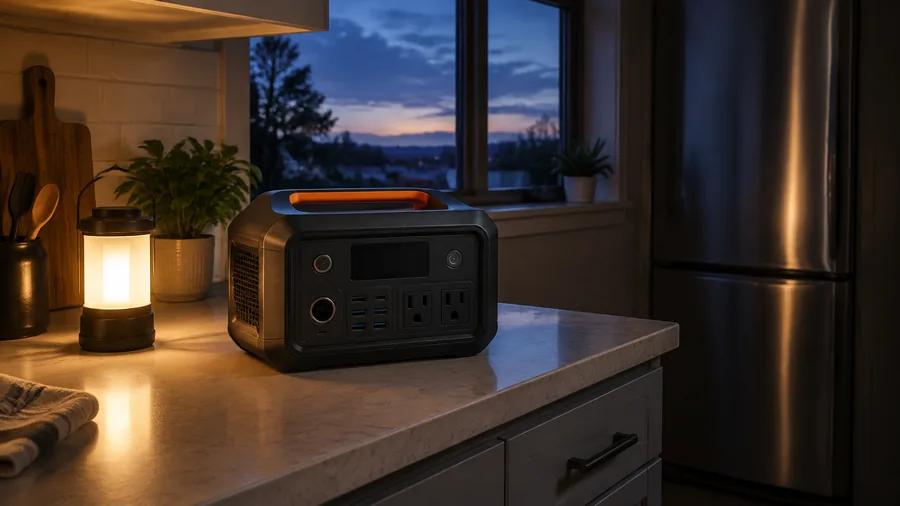
The HomePower 1000 v2 is Jackery's ~1 kWh home-UPS take on the Explorer 1000 class: 1,024 Wh of LiFePO4, 1,500 W continuous AC, a published 3,000 W surge peak, a 10 ms switchover, 400 W solar in, 6,000 rated cycles to 70%, and about 23.4 lb. On November 7, 2026 Jackery listed the black unit at $559 (list $649, in stock) and the white at $549 (list $699; Shopify inventory showed unavailable). That puts black over the $500 line that held on October 31. For a full-size fridge it still clears Willrun's motor-start rule; for a multi-day solar outage the Anker SOLIX C1000 remains the stronger grower.
Check price on AmazonManufacturer pageAs an Amazon Associate we earn from qualifying purchases.
Specifications
| Capacity | 1,024 Wh |
|---|---|
| Usable in Willrun math | 870 Wh (× 0.85) |
| Continuous AC output | 1,500 W (120 V, 60 Hz, pure sine, 12.5 A) |
| Motor surge used | 3,000 W (Jackery: maximum instantaneous / surge peak) |
| Resistive boost | None applied |
| UPS / switchover | 10 ms; bypass passes up to 12 A from the wall |
| Solar input | 400 W max via 2× DC8020 (16–60 V; 12 A per port, 21 A combined) |
| AC recharge | About 75 min standard; about 50 min emergency fast charge |
| Car input | 11–16 V, 8 A max (~11 h); car fast charger ~2.7 h |
| Chemistry / cycles | LiFePO4, 6,000 cycles to ≥70% |
| Weight / size | 10.6 kg (23.4 lb); 31.4 × 20.1 × 23.4 cm (~12.4 × 7.9 × 9.2 in) |
| Ports | 3× AC; USB-C 100 W; USB-C 30 W; USB-A 18 W; 12 V / 10 A car port; LED light |
| Expansion | None (no battery pack) |
| Noise / standby | ≤30 dB (Quiet Mode, 1 m); standby ≤16 W |
| Warranty | 3 years standard, +2 when registered from Jackery or authorized sellers |
| Model / colors | JHP-1000A (black+orange) / JHP-1000A-WH (Cloud White); app supported |
| Maker price (2026-11-07) | Black $559 (list $649, in stock); white $549 (list $699, inventory unavailable) |
| Source | Jackery product page; HomePower 1000 V2 Basic Information FAQ; HomePower 1000 user manual |
Will it start a fridge?
Willrun only trusts a full-size fridge when the station publishes a motor-start surge of at least 1,200 W. Boost modes for heaters do not count. Jackery lists a 3,000 W maximum instantaneous / surge peak on the HomePower 1000 v2 — the same class of number as the Explorer 1000 v2 — so it clears the rule. See the refrigerator outage guide for the ENERGY STAR medians and the surge method.
Runtime uses usable Wh ÷ (average load + ~15 W inverter draw). ENERGY STAR medians: top-freezer 363 kWh/yr ≈ 41.4 W; bottom-freezer 556 kWh/yr ≈ 63.5 W.
| Fridge type | Avg load | HomePower 1000 v2 | Explorer 1000 v2 | Anker C1000 |
|---|---|---|---|---|
| Top-freezer (median) | ~41 W | ~15.4 h | ~16.1 h | ~15.9 h |
| Bottom-freezer (median) | ~63 W | ~11.1 h | ~11.6 h | ~11.5 h |
| Published surge | — | 3,000 W peak | 3,000 W | 2,400 W |
Usable: HomePower 870 Wh, Explorer 910 Wh, C1000 898 Wh. Side-by-side medians draw more (~73 W) and land near 9–10 hours on this pack.
CPAP, router and other AC runtimes
Medical equipment note. This page is general information, not medical advice. If you rely on a CPAP, oxygen concentrator or other powered medical device, confirm your backup plan with your doctor or equipment supplier. Jackery says its power stations are not recommended for medical devices. Oxygen concentrators draw far more than a CPAP and are not covered by these runtimes. Affiliate commissions have no bearing on any compatibility statement here.
| Load | Watts | AC runtime | Notes |
|---|---|---|---|
| TP-Link Archer AX73 router | 8.7 W | ~36.7 h | Use DC/USB if you can; inverter idle dominates tiny loads |
| ResMed AirSense 11 + humidifier + heated tube | ~55 W | ~12.4 h (~1.6 nights) | Same method as the CPAP guide |
| AirSense 11 typical (user guide) | 56.1 W | ~12.2 h | AC with ~15 W inverter draw |
| AirSense 11, no humidifier | ~7 W | ~39.5 h | Heat is what empties the pack |
| ResMed AirMini | ~6.3 W | ~40.8 h | Travel CPAP on AC |
| Laptop + router | ~69 W | ~10.4 h | Desk outage kit |
| LG 55QNED85 TV | 76.9 W | ~9.5 h | — |
| Box fan + router + 2 LED bulbs | ~44 W | ~14.7 h | Hunter 52881 + two 9 W LEDs |
| Zoeller Model 53 sump (running) | 1,115.5 W | ~46 min | Surge OK on paper; intermittent duty lasts longer — see sump guide |
* Runtimes include about 15 W of inverter draw on AC (BLUETTI counts about 15 W of self-consumption in its AC180 runtime formula). Jackery's own FAQ lists standby ≤16 W on this model, which is the same ballpark. That overhead barely moves heaters or pumps, but it cuts small loads such as CPAP machines and routers hard. DC from the 12 V / 10 A car port or USB-C avoids most of it.
UPS / switchover and home use
Jackery sells the HomePower line as a home UPS: FAQ UPS timing is 10 ms, with pass-through charging and a bypass that can pass up to 12 A from the wall while the battery stays topped up (manual). That is in the same band as EcoFlow's <10 ms units and faster than the Explorer 1000 v2's <20 ms. Priority Routing can shed non-priority outlets when the battery hits a threshold you set — useful in a long outage if the fridge and router must outlast a TV.
Turn Energy Saving Mode off (app / settings) when a low continuous load must not time out. Test before you need it: with the device running, unplug the station from the wall and make sure nothing reboots.
Solar recharge
| Model | Max solar | Wh on a 4.5 sun-hour day* | vs battery | Weight |
|---|---|---|---|---|
| HomePower 1000 v2 | 400 W | ~1,350 Wh | ~132% | 23.4 lb |
| Explorer 1000 v2 | 400 W | ~1,350 Wh | ~126% | 23.8 lb |
| Anker SOLIX C1000 | 600 W | ~2,025 Wh | ~192% | 28.44 lb |
*Harvest = max input × 4.5 peak sun hours × 0.75 for heat, angle and wiring (same method as SolarSized). Hitting 400 W takes matching panels on both DC8020 ports; Jackery's FAQ says mixed wattages across the two ports are not supported, and four identical panels need SolarSaga adapters. AC + solar charging together is supported; solar + car input is not. No expansion battery — when you empty 1 kWh, solar is your only grow path.
Ports, weight and cycles
Three AC outlets share the 1,500 W inverter. USB-C tops out at 100 W and 30 W, plus one 18 W USB-A and a 12 V / 10 A car port — enough to charge a laptop and phones without waking the inverter. At 23.4 lb it is a hair lighter than the Explorer 1000 v2 (23.8 lb) and about five pounds under the C1000 (28.44 lb), which matters if it lives in a closet and comes out for camping.
Cycle life is the clearest differentiator inside Jackery's 1 kWh pair: 6,000 cycles to ≥70% vs 4,000 on the Explorer 1000 v2 (both to 70%, so they flatter vs brands that rate to 80%). Jackery's marketing frames that as ~16 years of daily cycling; treat it as a cell rating, not a field measurement. Cost per rated kWh of life still looks strong even at today's $559 black price (~$0.09 / kWh of rated life using 1.024 kWh × 6,000), vs roughly $0.13 on the Explorer at the same shelf price with 4,000 cycles.
vs Explorer 1000 v2 and Anker SOLIX C1000
| HomePower 1000 v2 | Explorer 1000 v2 | Anker SOLIX C1000 | |
|---|---|---|---|
| Capacity | 1,024 Wh | 1,070 Wh | 1,056 Wh |
| AC out / surge | 1,500 / 3,000 W | 1,500 / 3,000 W | 1,800 / 2,400 W |
| UPS | 10 ms | <20 ms | <20 ms |
| Solar | 400 W | 400 W | 600 W |
| Expansion | No | No | Yes, to 2,112 Wh |
| Cycles | 6,000 to 70% | 4,000 to 70% | 3,000 to 80% |
| Weight | 23.4 lb | 23.8 lb | 28.44 lb |
| AC outlets | 3 | 3 | 6 |
| Maker price noted | $559 black (2026-11-07) | $559 black (2026-10-31) | $469.99 sale (2026-10-31) |
Pick the HomePower when switchover speed, cycle rating or carrying weight matter more than a few dozen watt-hours, and you want Jackery's Priority Routing / home-UPS feature set. Pick the Explorer 1000 v2 if you find it cheaper on Amazon and just want the classic 1,070 Wh pack — same surge class, slightly more capacity, slower UPS. Pick the C1000 when solar harvest or a second battery later matters; it is heavier and its surge is lower (2,400 W) but still clears the fridge rule, and on October 31 it was the cheaper ~1 kWh fridge-capable buy at the maker.
Who should buy it
- Buy it for overnight fridge backup, a desk/router UPS that must not blink, or a light 1 kWh camping pack with a real motor surge.
- Skip it if you need multi-day solar headroom or an expansion battery — get the C1000 or a 2 kWh class unit from the home backup guide.
- Watch the price. Black was $499 at Jackery on October 31 and $559 on November 7. Amazon moves independently; use the button above for today's offer. It no longer fits a strict under-$500 budget at the maker — see the under-$500 guide for what still does.
As an Amazon Associate we earn from qualifying purchases. Specs and prices come from Jackery's published materials and store; Willrun did not receive a review unit from Jackery.
Related
- Jackery Explorer 1000 v2
- Anker SOLIX C1000
- Best power station under $500
- Best power station for a refrigerator
- Best power station for a CPAP
- Best power station for home backup
- EcoFlow vs Jackery vs BLUETTI
- All stations
Sources
- Jackery HomePower 1000 v2 product page (capacity, output, UPS marketing, price/stock rechecked 2026-11-07 via Jackery store JSON)
- Jackery FAQ: HomePower 1000 V2 Basic Information (ports, solar limits, charge times, UPS 10 ms, standby ≤16 W, cycles, weight, dimensions, no battery pack)
- Jackery HomePower 1000 user manual (bypass / 12 A pass-through cited on the under-$500 guide)
- ENERGY STAR certified refrigerators (median annual kWh)
- SolarSized methodology (solar harvest formula)
- Method: Willrun methodology. Appliance watts from each appliance page.
Questions
How long will the Jackery HomePower 1000 v2 run a refrigerator?
About 15 hours on a median ENERGY STAR top-freezer (~41 W average) and about 11 hours on a median bottom-freezer, using usable energy of 870 Wh (1,024 × 0.85) and about 15 W of inverter draw. The published 3,000 W surge peak clears Willrun's ≥1,200 W motor-start rule for a full-size fridge.
How long will the Jackery HomePower 1000 v2 run a CPAP?
On AC, a ResMed AirSense 11 with humidifier and heated tube at about 55 W runs roughly 12.4 hours (about 1.6 nights). Without heat, several times that. Jackery says its power stations are not recommended for medical devices; confirm any backup plan with your doctor. Affiliate commissions do not shape compatibility claims.
Is the HomePower 1000 v2 a UPS?
Jackery rates UPS switchover at 10 ms and sells a bypass mode that passes up to 12 A from the wall while the battery stays topped up. That is fast enough for most routers, modems, NAS boxes and many desktops. Turn Energy Saving Mode off if a low load must stay powered.
HomePower 1000 v2 vs Explorer 1000 v2 vs Anker SOLIX C1000?
HomePower and Explorer share 1,500 W / 3,000 W surge and 400 W solar; HomePower is 1,024 Wh at 23.4 lb with 6,000 cycles to 70% and a 10 ms UPS, while Explorer is 1,070 Wh at 23.8 lb with 4,000 cycles and under 20 ms. The Anker C1000 is 1,056 Wh, 1,800 W continuous, 2,400 W surge, 600 W solar, expandable, and heavier at 28.44 lb.
What does the 0.85 factor do?
Willrun multiplies nameplate watt-hours by 0.85 before dividing by average draw. That allowance is for inverter loss. It is not a measured efficiency for this model.
How this model stacks up against the other big brands: EcoFlow vs Jackery vs BLUETTI.
Budget context and what still fits under $500: best power station under $500.
On home oxygen? Power station for an oxygen concentrator has maker wattages, hours by station and a backup-cylinder plan.