Guide
Generator vs power station
A generator burns fuel and keeps going as long as you refuel it; a power station stores a fixed number of watt-hours and runs silently indoors. Pick a generator for multi-day outages, 240 V loads and well pumps; pick a power station for CPAPs, fridges for a night, and anywhere fumes are not allowed.
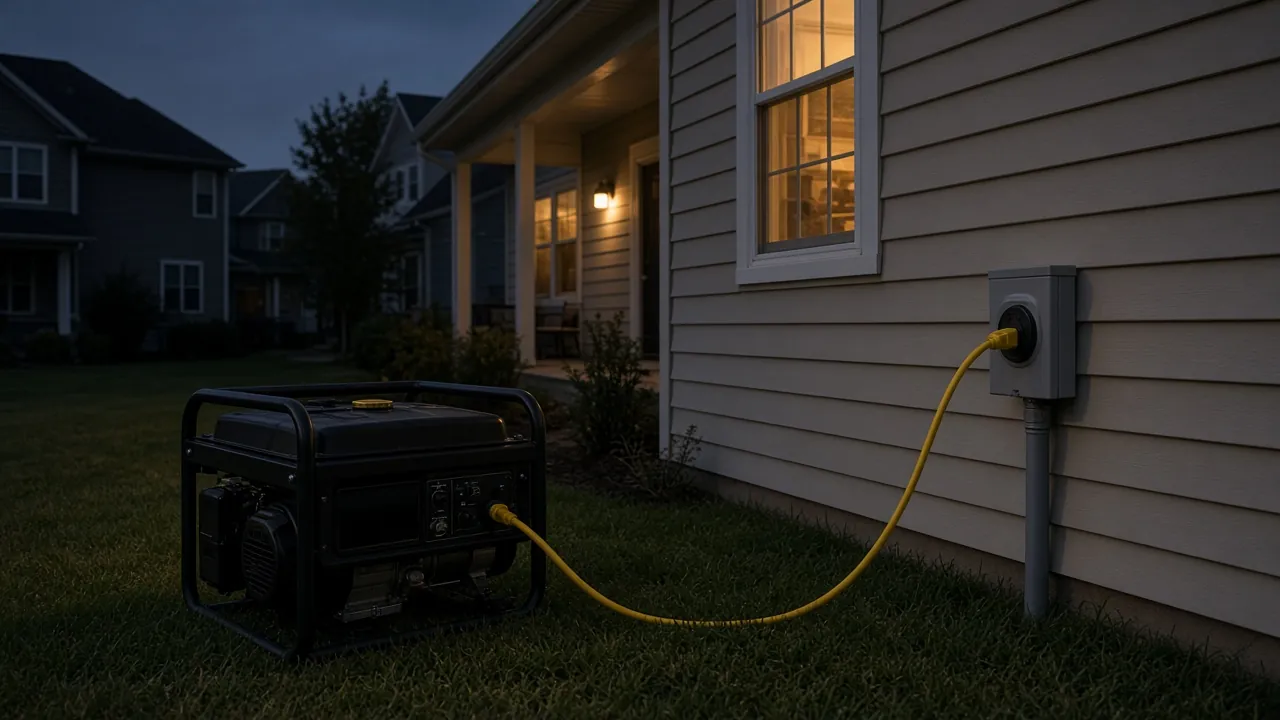
| Portable generator | Power station | |
|---|---|---|
| Energy | Unlimited while fueled | Fixed Wh, then recharge |
| Indoor use | Never — CO risk; run 20 ft from the house | Yes |
| Starting watts | Large surge headroom on most models | Limited; many publish no motor surge |
| 240 V / 30 A inlet | Models with L14-30R can feed one | Only a few large units |
| Noise | About 48–74 dBA in this set | Fan noise only |
| Maintenance | Oil, fuel stabilizer, exercise monthly | Keep charged |
Browse power stations · Browse generators
Safety first
- Run a generator outdoors only, at least 20 feet from the house, with the exhaust pointed away from doors, windows and vents. Never in a garage, basement, shed or crawlspace, even with the door open.
- Carbon monoxide is odorless and can kill in minutes. Keep battery CO alarms working inside the home.
- Never backfeed a house by plugging a generator into a wall outlet or dryer receptacle. It can energize utility lines and kill a lineworker or a neighbor.
- Connecting to home wiring requires a transfer switch or a listed breaker interlock with a power inlet box, installed by a licensed electrician and permitted where your jurisdiction requires it.